How to Stop a Squeaky Bed: Step-by-Step Australian Fix Guide
Share
A squeaky bed isn't just annoying — it's a sleep-quality problem. Every roll, partner movement, or shift in position turns into a sound that can pull you (or them) out of deep sleep. Fortunately, most squeaky beds are fixable in under 30 minutes with basic tools and the right approach. This guide walks you through it step-by-step: how to find where the squeak is coming from, the right fix for each common cause, and how to tell when the frame is past saving and it's time to replace. We'll also flag the one mistake that can stain a timber bed permanently — relevant if you've ever reached for a can of WD-40 without thinking.
To stop a squeaky bed: (1) locate the source by pressing different sections and listening, (2) tighten every bolt and screw, (3) lubricate moving joints — silicone spray for metal, beeswax for timber (never WD-40 on raw wood), (4) cushion contact points with old socks or felt pads, (5) check the slats, mattress, and floor level. If the frame is cracked, bent, or structurally unstable, it's time to replace — our Koala bed bases are built for quiet, sturdy sleep.
Key Takeaways
-
Most squeaky beds can be fixed in under 30 minutes with basic tools
-
The squeak usually comes from loose hardware, wood-on-wood friction, or worn-out slats — not the mattress itself
-
Use silicone spray on metal frames; use beeswax or paraffin on timber. Never use WD-40 on raw timber — it stains and attracts dust
-
Australian humidity causes timber bed frames to expand in summer and contract in winter, so squeaks often appear seasonally
-
If the frame is cracked or structurally unstable, replace it — our Koala bed bases are designed for solid, quiet construction
Why does my bed squeak?
Beds squeak for a handful of common reasons:
Loose hardware. Bolts and screws gradually work themselves loose over months of movement. This is the most common cause and usually the easiest fix.
Wood-on-wood friction. Slats rubbing against the frame, headboard joints, footboard connections — anywhere two pieces of timber rub together, friction creates noise as the wood ages and dries.
Metal-on-metal friction. Metal frame joints can develop a high-pitched squeak as the protective coatings wear off.
Warped or worn slats. Slats that have bowed, cracked, or shifted out of place create movement that translates to noise.
Worn-out mattress. Sometimes the squeak isn't the frame at all — older spring or hybrid mattresses can develop internal squeaks as the coils degrade.
Uneven floor. A bed that doesn't sit level on the floor will rock slightly with every movement, creating squeaks at the leg-floor contact.
Australian climate factor. Timber bed frames expand in humid AU summers and contract in dry winters. Joints that fit tightly in one season can develop play in another, which is why beds often start squeaking seasonally rather than gradually.
Tools and materials you'll need
A basic AU DIY kit covers most squeaky-bed fixes. Most of this is available at Bunnings (Australia's largest hardware retailer) for under $30 total if you don't already have it:
-
Spanner / adjustable wrench — for hex-head bolts
-
Phillips and flathead screwdriver set — for cross-head and slotted screws
-
Allen keys (hex keys) — for flat-pack bed hardware
-
Silicone spray — for metal frames (avoid WD-40 on timber)
-
Beeswax block or paraffin candle — for timber frames
-
Old cotton socks, felt pads, or rubber pads — for cushioning contact points
-
Cardboard or rubber shims — for levelling uneven floors
-
A friend or partner (optional but helpful) — to apply weight while you listen for the squeak
Step 1: Locate the source of the squeak
Before fixing anything, you need to know where the noise is coming from. Most people skip this step and try to fix the wrong thing.
The diagnostic process:
-
Strip the bed down to the mattress + frame (no doona, pillows, or sheets — they muffle the sound)
-
Have a partner press down on different sections one at a time: head end, foot end, each corner, middle, edges
-
If you're working alone, use weighted books or a backpack to apply pressure in turn
-
Listen carefully — most squeaks happen on weight shift, not constant load
-
Mark each squeak spot with a sticky note as you find them
Common squeak locations:
-
Bolts where headboard meets frame — usually a hardware issue
-
Where slats meet the frame rails — wood-on-wood friction
-
Mattress middle — could be the mattress itself, not the frame
-
Bed legs against the floor — uneven floor or worn leg pads
Once you know where each squeak is coming from, you can pick the right fix.
Step 2: Tighten every bolt and screw
The most common bed squeak is also the easiest to fix: loose hardware. Even if the bolts look tight, they often need another quarter-turn.
How to do it properly:
-
Work through every bolt and screw on the frame, including hidden ones under the bed
-
Tighten in a star pattern rather than going around in a circle — this distributes pressure evenly and prevents one side from over-tightening
-
Apply firm but not excessive force — over-tightening can crack timber or strip the screw thread
-
Don't forget the headboard-to-frame bolts, footboard joints, and centre support beam
For Allen-key (hex) hardware common in flat-pack beds: the same star pattern applies. Allen keys can strip the bolt head if you over-torque — stop when it feels firm, not when it stops turning.
If a bolt won't tighten because the hole is stripped, you can use wood filler or a slightly larger screw as a temporary fix — but a stripped bolt hole usually means the frame is near end-of-life.
Step 3: Lubricate the moving joints
After tightening, if squeaks remain at joint points, lubrication is the next step. The lubricant depends on the frame material — this is where most DIY guides get it wrong.
For metal frames:
-
Silicone spray is the safest choice (dries clear, doesn't attract dust)
-
WD-40 works in a pinch but is petroleum-based — it can leak onto bedding and attract dust over time
-
Apply sparingly to bolt threads, hinges, and any metal-on-metal contact point
-
Wipe off any excess
For timber frames:
-
Beeswax block rubbed across the contact surface is the traditional carpentry fix — it lubricates without staining
-
Paraffin candle wax works similarly — rub the candle across the rubbing surfaces
-
Bar soap is a common substitute that also works
-
Never use WD-40 on raw or stained timber — its petroleum base stains unfinished wood permanently and attracts dust, which makes the squeak worse over time. This is the single most common mistake we see in DIY squeaky-bed guides.
For mixed-material joints (metal bolt through timber):
-
Silicone spray on the metal bolt only — don't get it on the surrounding timber
-
A small amount of beeswax around the timber side adds extra protection
Step 4: Cushion the contact points
Some squeaks come from two surfaces rubbing under load — and even after tightening and lubricating, that friction can persist. Cushioning the contact points eliminates the noise at its source.
Where to add cushioning:
-
Between slats and the frame rails — cut strips of old cotton sock, felt, or thin rubber and place under each slat where it rests on the rail
-
Between the mattress and bed base — a mattress protector or fitted sheet adds a thin buffer
-
Between metal frame joints — small rubber washers or felt pads can quieten metal-on-metal squeaks
-
Between bed legs and the floor — adhesive felt pads (available at Bunnings) or rubber leg caps reduce both squeak and floor scratching
These are cheap, quick, and often the last step needed to silence a fix-resistant squeak.
Step 5: Check the slats, mattress, and floor
If the squeak persists after Steps 1–4, the problem is structural rather than friction-based:
Slats. Pull each slat out (if removable) and check for cracks, warping, or splits. A cracked slat needs replacing — most bed manufacturers sell replacements, or any 19 mm × 70 mm timber from Bunnings cut to the right length will do. Loose slats that aren't seated properly in their rests are a common squeak source.
Mattress. If the squeak comes from the middle of the bed and persists when you press down on the mattress alone (not the frame), the squeak may be inside the mattress — typical of older spring or hybrid models with degraded coils. Foam mattresses (like our Koala range) don't develop this kind of internal squeak because they have no metal coils.
Floor level. Most Australian houses settle over time, leaving floors slightly uneven. Check whether your bed rocks at all by pressing down on each corner — any movement indicates uneven legs. Fix with rubber-pad shims or thin pieces of cardboard folded under the low leg(s) until the bed sits flat.
For more on when an aging mattress is the actual culprit, see our how long does a mattress last guide.
When to repair vs replace your bed
If you've worked through all five steps and the squeak persists — or returns within weeks — it's time to consider replacement. Signs the frame is past repair:
-
Cracked timber in load-bearing members (rails, posts, or the centre support)
-
Bent metal in steel-frame beds
-
Stripped bolt holes in multiple locations
-
Multiple broken slats that keep cracking after replacement
-
Frame wobbles even after all hardware is tightened
-
The frame is older than 8–10 years and showing general wear
A bed frame is usually a 10–15 year purchase. If yours is past that and squeaking despite repairs, the time and frustration of repeated DIY fixes often outweighs the cost of replacement.
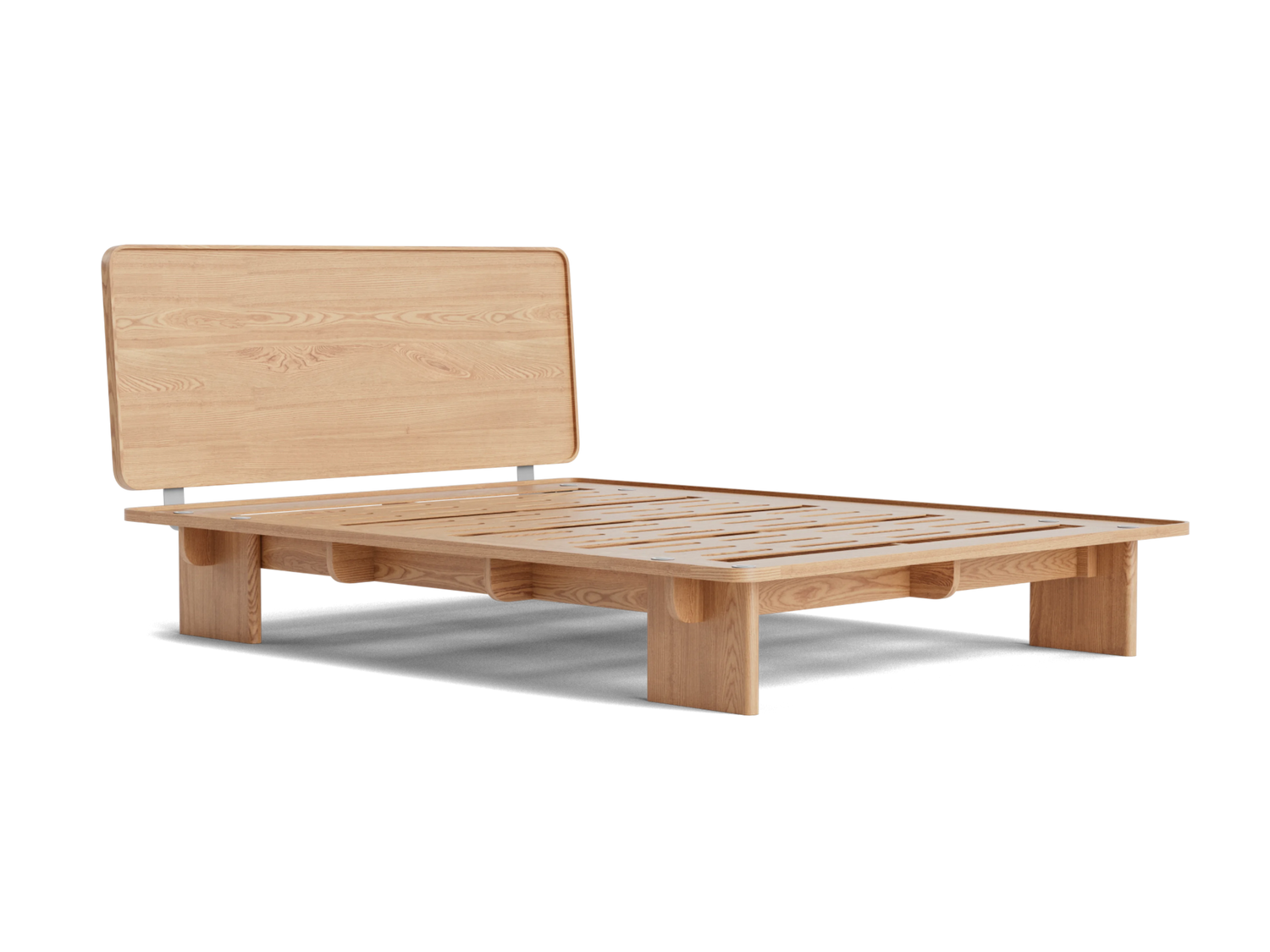
If you're looking at replacement, our Koala bed bases are built for solid, low-squeak sleep — slatted timber construction with proper hardware spec, available in single through super king sizes. For hands-on comparison before committing, visit our Koala Moore Park Showroom in Sydney, or order online with our 120-day trial.
Time for a quieter, sturdier bed?
If DIY fixes can't silence your current frame, our Koala bed bases are built with solid construction, properly torqued hardware, and slatted timber designed for airflow and quiet support. All backed by our 120-day trial — free metro delivery, free pickup if it's not the right fit.